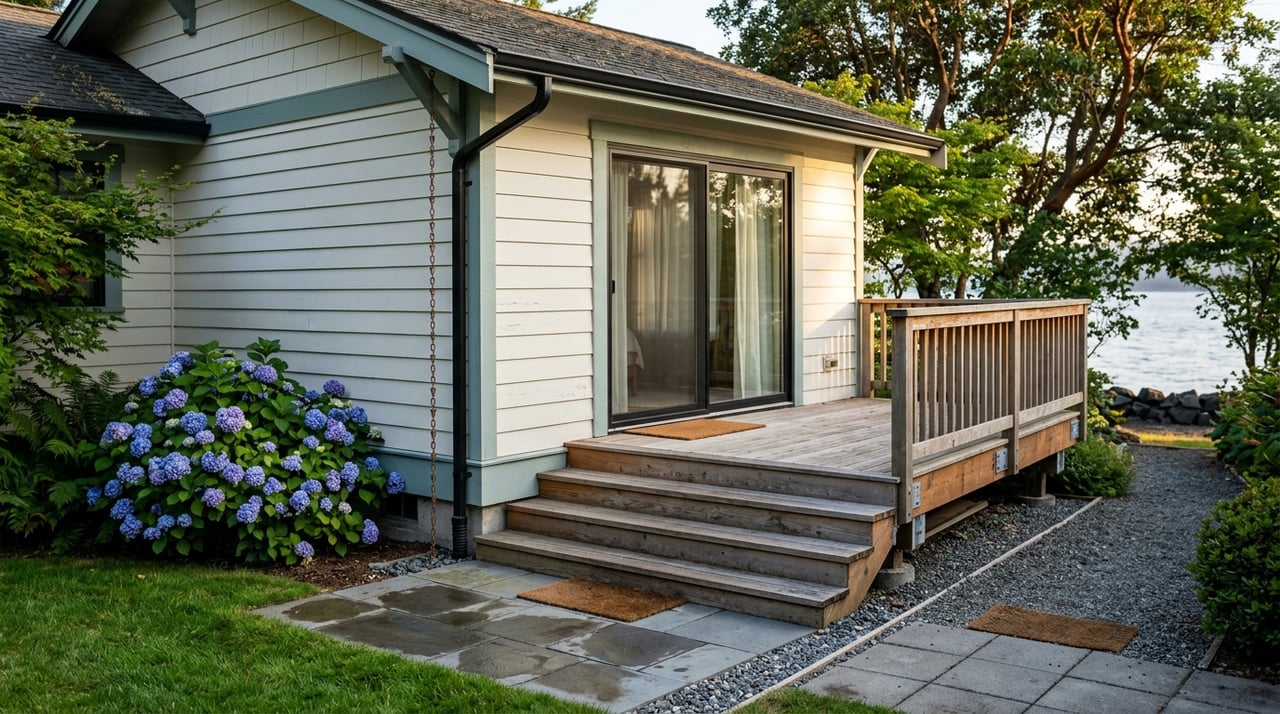
You can stand in a stunning Puget Sound waterfront home and still wonder how an appraiser will see it. That is a fair concern, especially when your property’s value depends on more than a simple “waterfront” label. If you are preparing to sell, refinance, or buy a shoreline home, it helps to know what actually shapes value in this market. Let’s dive in.
Waterfront Value Is More Than a Label
In the Puget Sound region, appraisers do not treat waterfront as a one-size-fits-all premium. King County valuation reports consistently break value into several related factors, including waterfront location, bank and access, view, topography, and sometimes traffic.
That matters because two homes on the water can perform very differently in the market. One may have easy shoreline access, broad views, and a usable site, while another may have a steep bank, restricted access, or a layout that does not take full advantage of the setting.
Appraisers are not measuring beauty for its own sake. Their job is to estimate market value and marketability based on market evidence, which means they look at how buyers actually respond to the property’s features and limitations.
What Appraisers Rate First
Location and View
On current appraisal forms, location and view are rated as adverse, neutral, or beneficial. The forms also call for specific view and location descriptions, including waterfront, water view, Puget Sound view, Seattle skyline view, Lake Washington view, and Mt. Rainier view.
That framework shows why not every water-facing property gets the same result. A view can help value, but the appraiser still has to explain whether that view is truly beneficial in the eyes of the market.
Waterfront Type and Access
King County tracks waterfront details separately rather than folding them into one broad category. Parcel data can distinguish the water body, waterfront footage, bank quality, restricted access, and view type.
For buyers and sellers, this is a big clue. The market often reacts not just to the fact that a home is on the water, but to how usable that waterfront is and how directly the property connects to it.
Topography and Site Usability
Topography can strongly influence both enjoyment and marketability. A site with easier access, more practical outdoor use, or fewer physical barriers may appeal differently than a property with steep slopes or harder-to-use land.
This is especially important in shoreline settings where the land itself shapes how buyers live in the home. A dramatic site may still face adjustments if usability is limited.
Why View Quality Is Relative
Not all views carry the same market reaction. King County’s local reports and parcel categories separate Puget Sound views, Seattle skyline views, Lake Washington views, Mt. Rainier views, and territorial views because the market does the same.
In other words, appraisers are not simply checking a box that says “has a view.” They are looking at the type of view, its breadth, and how strongly it contributes to value compared with similar homes.
King County’s Mercer Island reporting offers a helpful example. In that area, some sides of the island are described as more desirable due to stronger views and better afternoon sun, while others are considered slightly inferior due to narrower access, filtered light, or less desirable views.
The same principle applies across Puget Sound waterfront and view homes. A broad, open water outlook may be received differently than a partial or narrower view, even when both homes are attractive.
Layout Can Help or Hurt the View
A great view does not always translate into top value if the home’s layout does not support it. Appraisal guidance around functional utility focuses on design, layout, traffic patterns, and room size and type.
That means appraisers consider whether the home works well for how people actually live in it. If the main living spaces do not capture the view, or if the floor plan feels unusual, the market may respond less favorably.
Fannie Mae guidance also notes that homes with atypical or functionally obsolete layouts may have limited market appeal. In some cases, a floor plan is specifically required when the layout is unusual.
For waterfront sellers, this is a practical takeaway. If your best views are from secondary rooms instead of primary living areas, buyers and appraisers may not give the property as much credit as you expect.
Condition Still Matters Separately
Even a standout site cannot fully offset condition issues. Appraisers consider condition as its own category, separate from location and view.
Fannie Mae guidance states that properties with condition ratings from C1 to C5 may be eligible as is, while a C6 rating points to defects affecting safety, soundness, or structural integrity and requires repairs. Freddie Mac guidance also notes that smaller issues like loose stair railings, leaky faucets, or flickering lights can affect condition ratings.
For sellers, this means details matter. Waterfront and view homes often draw attention quickly, but deferred maintenance can still weigh on value if it changes how the appraiser or buyer sees the home’s overall readiness.
Site Constraints Can Influence Marketability
Shoreline Rules and Permits
In shoreline areas, value is also shaped by what can and cannot be done with the site. King County advises owners to review shoreline conditions, setbacks, flood zones, wetlands, steep slopes, and utility details early in the process.
In Seattle, the shoreline district includes Puget Sound and land within 200 feet of the shoreline, and many projects require shoreline permits. The city also notes that steep-slope environmental critical areas may trigger additional review.
Even when a property has a compelling view, these rules can affect remodeling plans, expansion potential, and buyer confidence. Appraisers pay attention because those factors can influence marketability.
Utilities and Infrastructure
Utility systems can also affect value, especially on rural or semi-rural waterfront properties. Appraisal guidance states that if the market shows resistance due to environmental hazards or conditions affecting wells, septic systems, or public water systems, the appraiser must address the effect on value and marketability.
This is one reason local property knowledge matters so much in shoreline and island markets. Utility details are not just technical notes. They are part of the larger story of how a property functions and how buyers perceive risk, cost, and ease of ownership.
What Buyers and Sellers Should Compare
When you are trying to understand likely value, the best comparison strategy is to match similar homes as closely as possible. Appraisers rely on comparable properties and market conditions, so broad comparisons often miss the real story.
Focus on homes with similar:
- Shoreline type
- View category
- Waterfront access
- Bank quality
- Topography
- Layout and functional appeal
- Overall condition
This approach is especially important in luxury and lifestyle-driven markets, where small site differences can create meaningful value gaps.
What Sellers Can Prepare Before an Appraisal
If you are getting ready for an appraisal or listing consultation, a few materials can make the process clearer and more efficient. The goal is to help the appraiser understand the home accurately without needing to make assumptions.
Helpful items include:
- A clear floor plan
- A concise repair and improvement history
- Information about shoreline access
- Notes on permits or prior approved work
- Utility details, including well, septic, or water service information where relevant
For waterfront and view properties, these details can help frame the home’s strengths and reduce confusion around site constraints or functionality.
Why Local Context Matters So Much
Puget Sound waterfront homes are highly individual. Two properties with similar square footage can have very different market reactions because of access, orientation, topography, and the way the home connects to the setting.
That is why local context matters so much in pricing, preparing, and presenting these homes. When you understand what appraisers notice, you can make better decisions about timing, pre-sale preparation, property marketing, and buyer expectations.
If you are thinking about selling or buying a waterfront or view property, working with someone who understands shoreline nuances, site constraints, and lifestyle presentation can make the process feel much more grounded. For tailored guidance on island and waterfront properties, connect with Connie Sorensen.
FAQs
What do appraisers notice first in Puget Sound waterfront homes?
- Appraisers often start with location, view, waterfront access, bank quality, topography, layout, and condition because those factors most often shape market value and marketability.
Do all Puget Sound waterfront homes appraise for a premium?
- No. Waterfront status alone does not guarantee a premium because appraisers also consider access, usability, view type, topography, and site limitations.
Do all water views add the same value in Puget Sound homes?
- No. Appraisal forms and King County data distinguish between view types such as Puget Sound, Seattle skyline, Lake Washington, Mt. Rainier, and territorial views, and the market may react differently to each.
How does layout affect appraisal value in waterfront homes?
- A layout can affect value if the home does not use the view well or has an atypical floor plan that limits market appeal.
What should sellers prepare before a waterfront home appraisal?
- Sellers should gather a floor plan, repair history, shoreline access information, permit details, and utility information so the appraiser has a clearer picture of the home and site.
Do shoreline rules matter when appraising Seattle-area waterfront property?
- Yes. Shoreline permits, setbacks, steep slopes, wetlands, flood zones, and utility constraints can all affect marketability and may influence value.