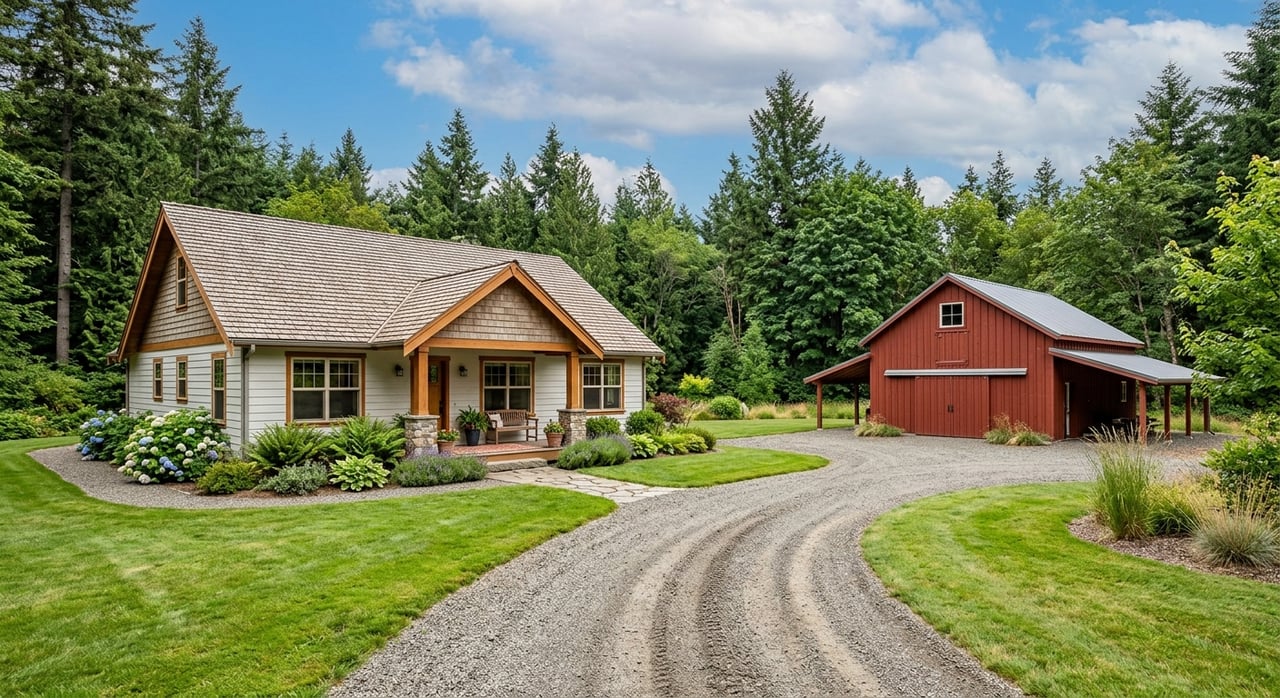
Wondering how to get a Vashon acreage or farm property truly ready for market? On the island, buyers are not just looking at the house. They are also sizing up the land, access, water, septic, outbuildings, and how easy the property will be to understand from off-island. If you want a smoother sale and a stronger first impression, it helps to prepare both the property and the paperwork well before listing. Let’s dive in.
Why Vashon acreage needs a different approach
Vashon-Maury Island is an unincorporated rural area in King County, and many areas have low-density zoning such as one home per five or ten acres. That rural setting shapes how buyers evaluate acreage and hobby-farm properties. They tend to focus on whether the land is usable, readable, and well documented.
That means your prep plan should go beyond fresh paint and basic cleaning. Buyers often want to know how they get in, where they can turn around, how the land drains, what structures are permitted, and whether the systems are current. On Vashon, those details often carry as much weight as the home itself.
Start with access and first impressions
The first few minutes on an acreage property matter. If your driveway edges are overgrown, the gate sticks, or there is no clear place to park and turn around, buyers may start to worry about ongoing maintenance or access problems.
Before listing, clean up the areas that control circulation and arrival. Focus on driveway edges, gate hardware, parking areas, and turnaround space. If your property has a long lane or shared drive, simple wayfinding can also make the site easier to navigate.
This step matters for more than appearance. Washington’s seller disclosure form asks about private roads, easement agreements, rights-of-way, access limitations, joint maintenance agreements, boundary disputes, and survey status. If there are access questions, it is smart to sort out the documentation before your listing goes live.
Make the land look usable
Acreage buyers are often trying to understand how the property functions day to day. If the site looks overgrown or undefined, it can be harder for them to picture what the land can actually support.
One of the best ways to prepare is to create clear, visible use areas. Mow fields, edge key paths, define pasture boundaries, and make fenced areas easy to read. Even simple cleanup can help the property feel more organized and more useful.
Washington State University guidance for small acreage properties also points to the value of safe, sturdy fencing and gates that are large enough for equipment or deliveries. If you have fencing, check for leaning sections, weak posts, or protruding hardware. Buyers notice these details, especially on farm and hobby-property listings.
Tackle mud, runoff, and weeds early
On Vashon, wet conditions can quickly make parts of a property look difficult to manage. Muddy paddocks, standing water, and visible runoff can raise questions about drainage, animal management, and long-term upkeep.
WSU recommends using higher-ground sacrifice areas or paddocks during wet periods and keeping livestock off wet soils when possible. Vegetated buffers can also help filter runoff away from water sources. From a listing standpoint, the goal is simple: help the property look stable, cared for, and easy to understand.
Visible weed control matters too. King County maintains a noxious-weed program and encourages owners to control invasive weeds where feasible. Cutting back invasive growth and tidying field edges can improve both stewardship and presentation.
Clean up brush and visible hazards
Overgrown brush and obvious hazard trees often read as deferred maintenance. Even if the property has great potential, buyers may focus first on what feels unsafe or neglected.
If you have dead limbs, leaning trees, or brush crowding access points, deal with those issues early. For more significant tree work, remember that King County notes some tree removals may require permits. If the work involves an imminent-hazard exemption, the county recommends before-and-after photos, and hazard trees generally need arborist documentation.
This is a good area to handle carefully. You want the property to feel open and well maintained, but you also want any major clearing to be done with the right documentation.
Verify barns, sheds, and other structures
Outbuildings can add real value to an acreage listing, but only when buyers feel confident about what they are seeing. A barn, shop, shed, greenhouse area, retaining wall, or fenced enclosure may raise questions about permits and use.
In unincorporated King County, permits may be required for construction, enlargement, alteration, repair, moving, or demolition of a structure. Some smaller items, such as a storage shed of 200 square feet or less or fences 6 feet high or less, may not require a permit unless critical areas apply.
Before marketing any structure as a major asset, verify what was permitted and what was not. Pulling that information early helps you describe the property accurately and avoid surprises later in the sale.
Gather septic records before buyers ask
For many Vashon properties, septic is one of the first technical questions a buyer will ask. If you wait until you are under contract to start gathering records, you may lose valuable time.
King County requires septic systems to be inspected before transfer of title, although a recent Operation or Performance Monitoring Report completed within the last 6 months can sometimes satisfy that requirement. Sellers should gather the current inspection report, pumping history, repair records, and as-built drawings as early as possible.
King County’s records system may also include site designs, historic inspection reports, and as-built record drawings. Having those materials ready can make your property easier to evaluate and reduce uncertainty for buyers.
If your acreage is near the shoreline, this matters even more. King County has a Marine Recovery Area on Vashon-Maury Island tied to water-quality concerns, and septic condition is closely connected to shoreline stewardship.
Document your well and water supply
Private wells are another common point of buyer concern. A buyer may want to know not just whether the well works, but also whether the records are clear and the water has been tested.
The Washington Department of Health recommends annual testing of private well water for coliform bacteria and nitrate. It also recommends arsenic testing at least twice while you own the well. If you have recent test results, keep them organized and ready to share.
The Washington State Department of Ecology’s well-report viewer can also help owners search well construction details, yield data, location, and related information. For sellers, this is useful preparation because it helps answer practical questions before they become obstacles.
Pull easements, surveys, and permit history
Large parcels often come with a paper trail that matters. Shared drives, access easements, boundary line questions, old grading work, or past additions can all affect how confident a buyer feels moving forward.
Washington’s seller disclosure form specifically asks about boundary disputes, private-road or easement agreements, access limitations, joint maintenance agreements, surveys, and unusual restrictions. If the answer to any of those questions is yes, the form directs the seller to explain and attach documents when available.
King County’s permit records center can access many residential building permits back to about 1970, with some associated drawings back to about 1987. Land-use records may also include plats, short plats, grading permits, conditional-use permits, and boundary-line adjustments. Pulling those records ahead of time can save stress once your listing is active.
Plan your timeline around island logistics
Vashon’s island access adds one more layer to pre-listing prep. Washington State Ferries serves Fauntleroy/Vashon and Southworth/Vashon, and WSDOT notes that low tides can restrict larger vehicles on some Vashon routes.
That may affect cleanup crews, haulers, photographers, septic vendors, inspectors, and contractors. In practice, it helps to schedule early and leave buffer time. A prep calendar that might feel simple on the mainland often needs a little more coordination here.
Invest in strong digital presentation
Acreage listings on Vashon often need to win over buyers before an in-person tour ever happens. Many buyers start online, and listing photos, detailed property information, and floor plans are among the most useful features during the home search.
That is why digital presentation matters so much for island properties. Clean exterior photography, interior images, floor plans, and clear notes about septic, well, access, and land use can help remote buyers understand the property quickly.
NAR also reports that staging helps buyers visualize a home, and that idea extends outdoors on acreage listings. A tidy, defined site usually feels more usable than one that looks raw or cluttered.
For Vashon acreage, it also helps to present the land in a way that is easy to follow. WSU small-acreage guidance encourages owners to inventory site assets and create physical inventory maps. In a listing context, that can mean clearly labeling pastures, fenced runs, trails, garden areas, water sources, and service points so buyers can understand how the property works.
A practical prep sequence
If you are planning ahead, a structured timeline can make the process feel much more manageable. For many acreage sellers, this sequence works well:
- Pull septic, well, permit, survey, easement, and boundary records.
- Schedule inspections and address access, fencing, drainage, and cleanup items.
- Resolve permit-sensitive work before marketing any structure or site change as complete.
- Stage the home and site, then create photography, floor plans, and digital marketing assets once the property is tidy and documented.
This kind of preparation creates a clearer listing story. It also helps reduce buyer hesitation, especially for people evaluating the property from Seattle, Tacoma, Kitsap, or elsewhere off-island.
The goal is confidence
The strongest Vashon acreage listings usually combine clean land, clear access, complete records, and polished marketing. When those pieces come together, buyers can spend less time guessing and more time appreciating what makes your property special.
If you are thinking about selling, it helps to work with someone who understands both the lifestyle and the technical side of island property. For guidance on preparing your acreage, waterfront, or rural home for market, connect with Connie Sorensen.
FAQs
What should you fix first before listing a Vashon acreage property?
- Start with access, cleanup, and documentation. Clear the driveway and parking areas, address visible hazards, tidy the land, and gather septic, well, easement, survey, and permit records early.
Why do septic records matter when selling a Vashon farm or acreage home?
- King County requires septic inspection before transfer of title, with limited exceptions for recent qualifying reports. Having inspection records, pumping history, repair records, and as-built drawings ready can reduce delays.
How should you prepare land for buyers touring a Vashon hobby farm?
- Make the land easier to read by mowing, edging, defining pasture or garden areas, checking fencing and gates, and improving muddy or overgrown areas where feasible.
Do you need permit records for sheds and barns on Vashon acreage?
- Buyers often ask whether outbuildings and site improvements were permitted. Pulling permit history for barns, sheds, decks, retaining walls, grading, and similar work helps you market the property more clearly.
Why is online marketing so important for Vashon acreage listings?
- Many buyers begin their search online, and rural island properties often need to create confidence before an in-person visit. Strong photos, floor plans, and clear property details can make a major difference.